



Article: Going Big: How to Choose a Statement Lab-Grown Diamond
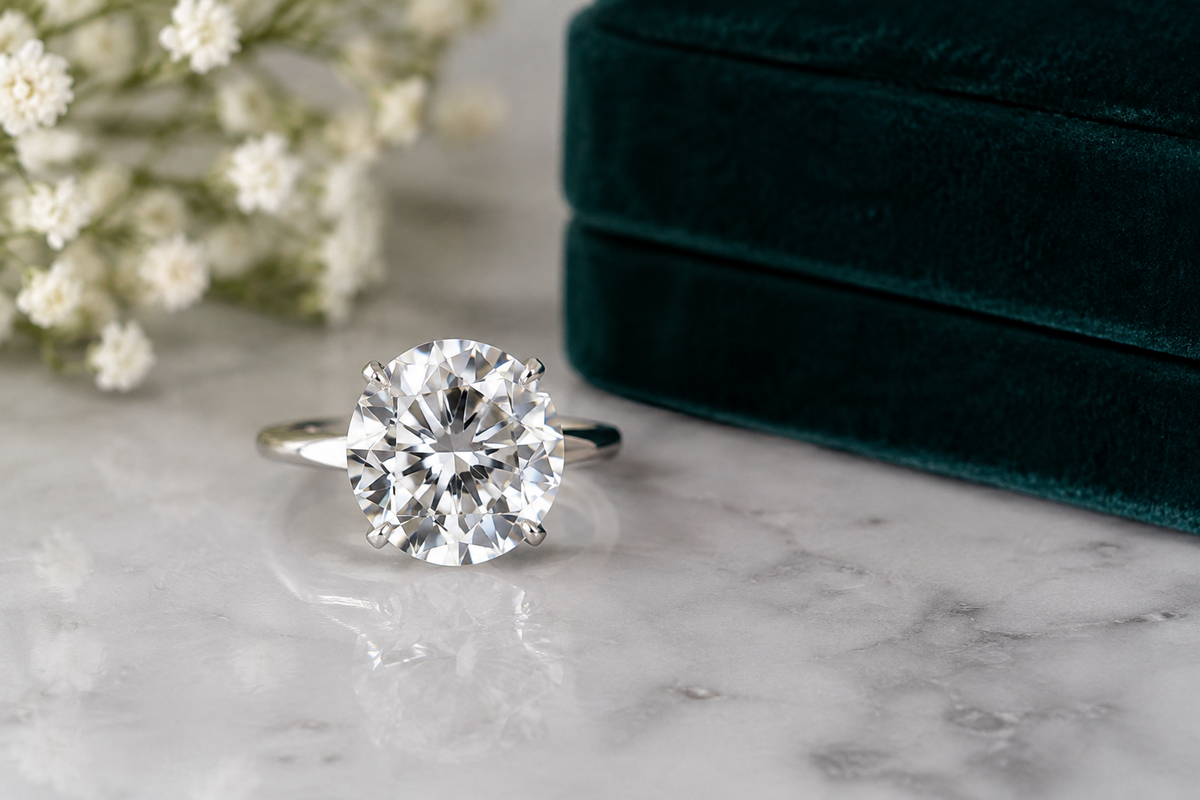
Going Big: How to Choose a Statement Lab-Grown Diamond
What Makes a Large Lab-Grown Diamond Ring Look Like a Statement Piece?
A large lab grown diamond ring looks like a statement piece when the stone's visible surface area, shape and proportions command attention at a glance, not simply when the carat number is high. Two diamonds of the same weight can look noticeably different on the hand, so it pays to judge size by what you can actually see.
Compare carat weight with face-up measurements to judge visible size
Carat measures weight, not width. The face-up measurement, given in millimetres on a grading report, tells you how large the diamond appears when viewed from above. A well-cut 2 carat round brilliant typically measures around 8.0 mm, but a deep, poorly proportioned 2 carat stone can measure closer to 7.6 mm, which is a visible difference on a finger.
Shape matters just as much. Elongated cuts spread their weight across a larger surface, so they often look bigger than a round diamond of equal carat weight.
| Shape (approx. 2 carat) | Typical face-up size | Visual effect |
|---|---|---|
| Round brilliant | About 8.0 mm diameter | Classic, compact |
| Oval | About 9.5 x 6.5 mm | Looks larger, elongates finger |
| Emerald | About 9 x 6.5 mm | Broad, glassy table |
| Pear | About 10 x 6.5 mm | Long, tapered profile |
Measurements vary by cut, so treat these as guides. When comparing stones, use these checks:
- Request the length, width and depth in millimetres, not just the carat weight.
- Look at the length-to-width ratio for fancy shapes, as it shapes the overall impression.
- Check the depth percentage; a shallower stone usually spreads more width for its weight.
- View the diamond on a hand or in a ring mock-up, since scale changes dramatically once it is next to your knuckle.
Choose proportions that balance dramatic scale with everyday wearability
The most striking large rings balance the stone with the finger, the setting and your daily routine. A diamond that is wide relative to your finger makes a bold statement, while one that sits too high or overhangs the band can snag on clothing and knock against surfaces.
Finger size changes how a stone reads. A 3 carat oval may look generous on a size L finger, yet appear more modest on a size S. Try on several sizes in person where possible, as a jeweller can show you how each looks on your own hand.
- Setting height: A lower-set stone feels more secure for everyday wear and is less likely to catch.
- Band width: A slim band emphasises the diamond, while a slightly wider band supports a heavier stone.
- Stone width: Aim for a diamond that sits comfortably within the finger's width without extending far past the edges.
- Lifestyle: If you type, cook or travel often, prioritise a comfortable, protected profile over maximum height.
Choose the largest diamond that still feels comfortable to wear every day. A statement ring only works if you enjoy wearing it.
Which Diamond Shape and Cut Make a Large Stone Look Its Best?
Elongated shapes such as oval, pear and emerald usually look largest for their carat weight, while a well-cut round brilliant delivers the most sparkle. The right choice depends on whether you want maximum size on the finger or maximum fire, and a precise cut matters more as the stone grows.
Compare round, oval, emerald, pear, and elongated shapes for visual impact
Once you know how face-up measurements affect visible size, shape becomes your most useful tool. A shape with a larger surface area, or one that stretches along the finger, can look noticeably bigger than a round stone of the same carat weight.
| Shape | Visual effect | Best for |
|---|---|---|
| Round | Maximum brilliance | Classic sparkle |
| Oval | Large face-up spread | Modern, elongating look |
| Emerald | Glassy, architectural | Understated luxury |
| Pear | Tapered, dramatic length | Distinctive style |
| Elongated cushion or radiant | Soft corners, strong presence | Bold, everyday wear |
Round diamonds hide small flaws well and reflect light most efficiently, but they appear smaller than other shapes at the same weight. Ovals and pears give extra length, which also flatters shorter fingers. Emerald cuts show off clarity and colour like a window, so they reward higher-quality stones. Look at the length-to-width ratio too: an oval around 1.35–1.50 or an emerald near 1.40 tends to look balanced rather than stretched.
Assess cut quality, light performance, and bow-tie effects before choosing
Cut quality decides how much a large diamond sparkles, and it matters more as size increases because any dull or dark area becomes easier to see. For round stones, look for an Excellent (or Ideal) cut grade on the report. Fancy shapes have no standard grade, so judge them by proportions, symmetry and how they look in person or in high-quality video.
Pears, ovals and marquise cuts can show a bow-tie, a dark shadow across the centre where light leaks out. A faint one is normal, but a heavy bow-tie makes a large stone look lifeless. Use this checklist when comparing stones:
- Check that the table and depth percentages sit within typical ranges for the shape.
- Look for even sparkle across the whole stone, not just at the edges.
- Avoid stones that look washed out or have a large dark centre.
- Ask for 360-degree videos or view several candidates side by side.
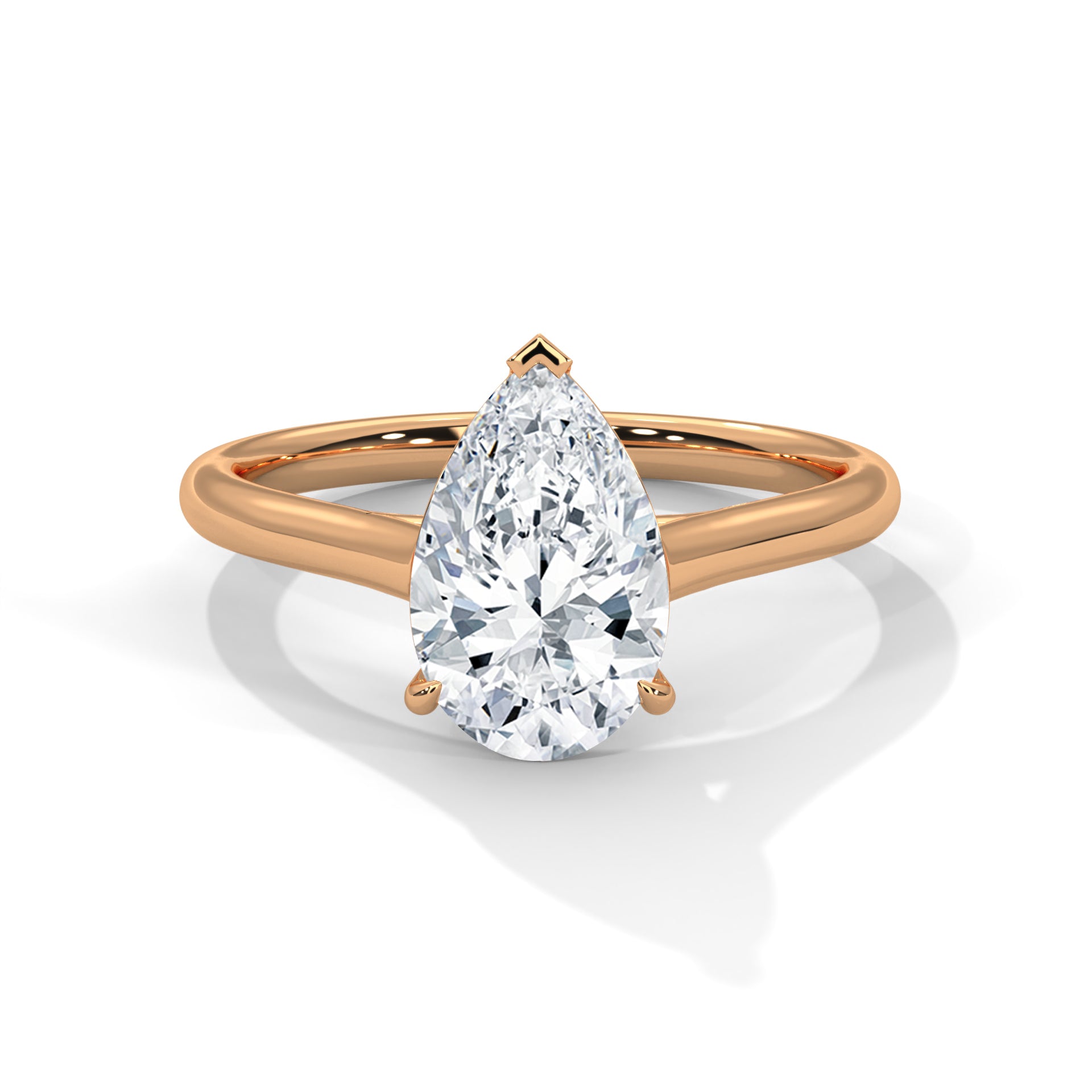
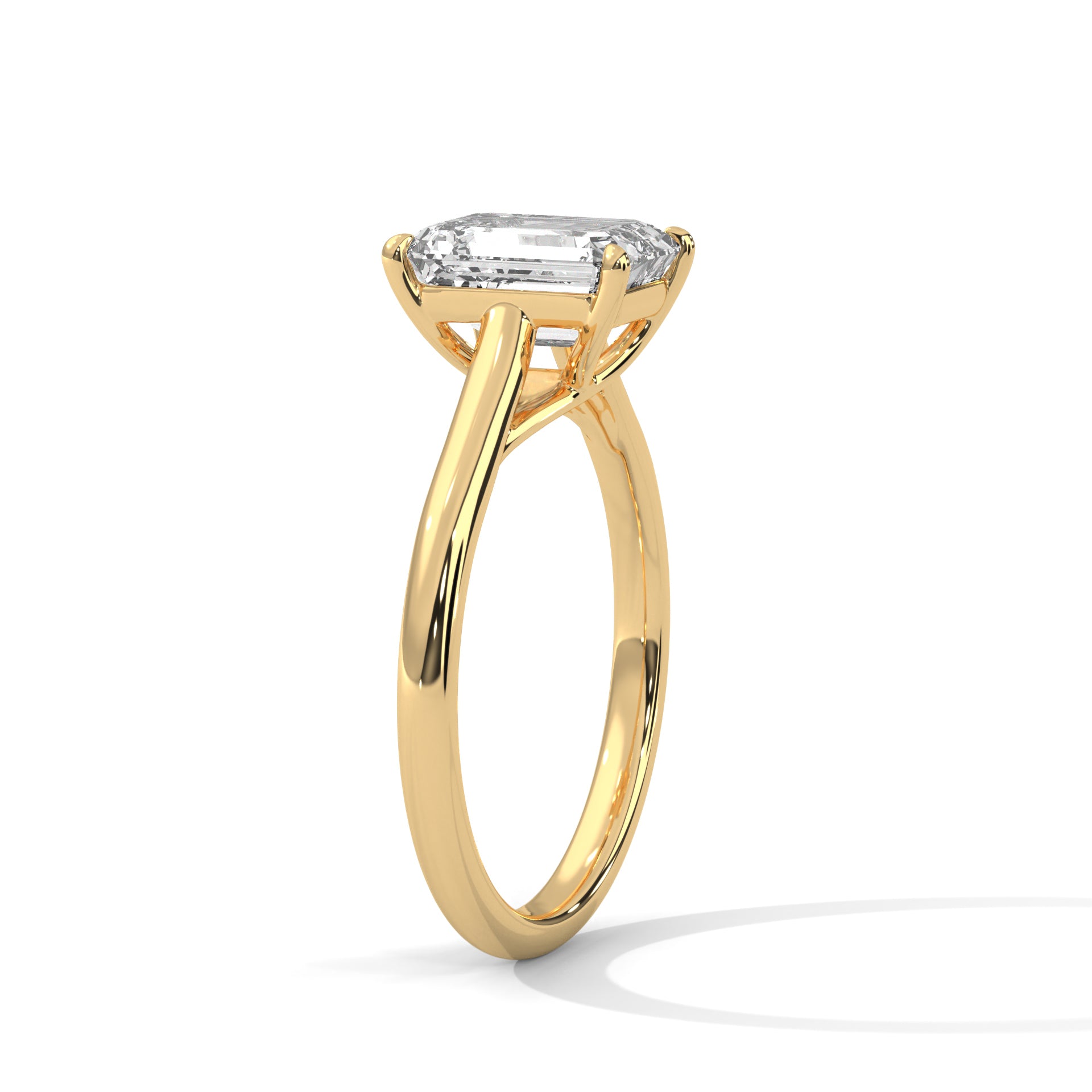
If you would like to see an elongated shape with strong presence, this lab-grown diamond ring from Aurika Gems is a useful reference for how shape and setting work together on a statement stone.
Seeing a stone in person with a jeweller helps you spot light performance issues that photos and certificates cannot fully show.
How Should You Balance the 4Cs in a Large Lab-Grown Diamond?
For a large lab grown diamond ring, put cut first, then spend on colour and clarity only where the eye can see the difference. Once you have chosen a shape with strong light performance, the remaining 4Cs decide how clean and bright the stone looks at size. Carat weight is the one you have already set through your budget and visible-size goals.
Prioritize color and clarity based on what is visible at larger sizes
Larger stones show more of their body colour and internal features, so grades that pass unnoticed in a 0.5ct diamond can become obvious in a 3ct. Aim for colour D to G and clarity VS1 to VS2 as a sensible balance. Lab-grown diamonds are often available in these grades at lower prices than natural stones of equal size.
- Colour: D to F looks icy white in any metal. G to H is usually still colourless face-up, especially in yellow or rose gold. Elongated and step-cut shapes such as emerald and radiant show colour more readily because of their larger tables and longer facets.
- Clarity: VS1 to VS2 is typically eye-clean in most shapes. Step cuts like emerald and Asscher act like a window, so favour VS1 or better. Brilliant cuts such as round and oval hide small inclusions well, so VS2 or even SI1 can work if the stone is confirmed eye-clean.
- Inclusion position: A small feather near the girdle, where a prong can cover it, is far less noticeable than a dark spot under the table.
If you need to trade off, accept a slightly lower colour or clarity grade before you compromise on cut. A well-cut G colour, VS2 stone will look more lively than a poorly cut D colour, VVS stone.
Use grading reports and side-by-side viewing to compare stones accurately
A grading report from a recognised laboratory such as IGI or GIA confirms the 4Cs, the growth method and the exact measurements, so always compare stones using the report rather than the headline carat figure. Check the cut grade, polish, symmetry, table and depth percentages, and the length-to-width ratio for fancy shapes. Two 3ct stones can differ by a millimetre or more in face-up size depending on their proportions.
Then view the shortlisted stones in person if you can. Side-by-side comparison under both jewellery lighting and daylight shows what a certificate cannot:
- Compare two or three stones with different grades, such as G VS2 and E VS1, and judge whether you can see any difference.
- Check for bow-tie shadows, dull areas and visible inclusions at arm's length, not just under magnification.
- Ask to see the stone loose and then in a setting, as metal colour changes how tint appears.
If you cannot see a difference between two grades at normal viewing distance, take the cheaper stone and put the savings towards size or setting quality.
In a consultation, a jeweller can lay out candidate stones together and help you decide where an extra grade is worth paying for and where it is not.
Which Ring Setting Best Supports a Large Lab-Grown Diamond?
Once you have balanced colour, clarity and cut, the setting decides how securely the stone sits and how large it appears. For a large lab grown diamond ring, prong and bezel settings offer the best balance of security and visibility, while halo and three-stone designs add extra presence.
Compare prong, bezel, halo, and three-stone settings for security and style
Each setting protects a heavier stone differently, so the right choice depends on your lifestyle as much as your taste.
| Setting | Security | Visual effect |
|---|---|---|
| Prong | Good with 4–6 prongs | Maximum light, classic look |
| Bezel | Excellent, full or partial rim | Sleek, modern, slightly smaller look |
| Halo | Good, protects the edges | Adds apparent size and sparkle |
| Three-stone | Good, depends on the claws | Wider, balanced finger coverage |
- Prong settings let the most light into the stone. Six prongs give a larger diamond more grip, and rounded or flat-tipped claws snag less on clothing.
- Bezel settings wrap the girdle in metal, which suits active hands and protects fragile corners on emerald, pear or marquise shapes.
- Halo settings surround the centre stone with small diamonds, so a 3ct stone can read closer to 3.5ct. They also shield the edge of the stone from knocks.
- Three-stone settings add side diamonds that widen the overall design, which works well on longer fingers or with elongated shapes.
A jeweller can also check the claw thickness and seat depth. These details matter more than the style name when a stone weighs several carats.
Match the setting, band width, and metal to the diamond’s proportions
The band should look in proportion to the stone. A thin band of 1.5–2mm lets a large diamond appear to float and emphasises its scale, while a band of 2.5–3mm gives a heavy stone more support and stability. A very wide band can overpower a stone under 2ct.
Setting height matters too. A low-set stone is less likely to catch on knitwear and bags, whereas a high setting adds drama but may spin on the finger. If you wear your ring all day, ask for a lower profile and a well-fitted band, as sizing and weight distribution affect comfort.
Metal changes the overall impression:
- Platinum is dense, durable and holds claws firmly, which suits heavy stones.
- 18ct white gold gives a bright, cool finish at a lower cost, though it may need re-plating over time.
- 18ct yellow or rose gold adds warmth and can flatter slightly warmer-toned stones.
Choose the setting that protects the diamond first, then refine the band width and metal to flatter its shape.
An in-person consultation lets you try different combinations on your hand and compare how each setting changes the stone’s apparent size.
How Can You Buy a Large Lab-Grown Diamond Ring with Confidence?
You can buy a large lab-grown diamond ring with confidence by setting a total budget first, then verifying the stone's independent grading report and the jeweller's after-sale policies. Once you have settled on a shape, proportions and setting style, these final checks protect both your money and your long-term satisfaction.
Set a budget and compare total ring value, not carat weight alone
Decide on a ceiling for the finished ring, not just the diamond. The setting, metal, side stones, engraving and any bespoke design work all add to the final price, so a stone that looks affordable on its own can push a completed ring over budget.
Lab-grown diamonds typically cost far less per carat than natural stones, which lets many buyers go larger or choose higher quality. Compare options by what you actually see and wear, not by the headline number.
- Allocate roughly the budget for the stone and setting together, leaving room for a sturdier setting if the diamond is large.
- Compare stones at the same carat weight and shape, then weigh cut grade, colour and clarity differences against price.
- Consider a slightly under-round weight, such as 1.90ct instead of 2.00ct. The size difference is barely visible, but the price gap can be noticeable.
- Ask for a full quote covering the diamond, setting, metal, finishing and delivery.
For example, a well-cut 2.5ct oval with a strong face-up spread may look larger than a poorly cut 3ct stone, and it may cost less. Total visual impact per pound spent is a more useful measure than carat weight alone.
Check the grading report, return policy, warranty, and resizing options
Always ask for an independent grading report from a recognised laboratory such as IGI or GIA, and confirm that the report number matches the stone. The report should state carat weight, measurements, cut grade where applicable, colour, clarity and that the diamond is laboratory-grown. Many stones also carry a laser inscription on the girdle that you can check under magnification.
Then look closely at the terms that apply after purchase. A large diamond is a significant investment, so the jeweller's policies matter as much as the stone itself.
- Returns: Check the window, whether bespoke or made-to-order pieces are excluded, and who pays for return shipping.
- Warranty and aftercare: Look for cover against manufacturing faults, plus services such as cleaning, prong checks and re-tipping.
- Resizing: Ask whether resizing is included, how many sizes the design can safely move, and whether any settings, such as full eternity bands, limit it.
- Insurance: Request a valuation document suitable for insuring the ring, and confirm the replacement value basis.
Ask to view the finished ring in person where possible. A consultation lets you check the stone's sparkle, the setting's security and the comfort of the fit before you commit.
A transparent jeweller will answer these questions plainly and put the answers in writing, which is a reliable sign you are buying well.
Large Lab-Grown Diamond Ring FAQs: Choosing, Wearing, and Caring for Your Ring
For most people, a centre stone of 2 carats or more reads as clearly large, and 3 carats and above is a true statement size. Visible size depends on more than weight, though. On an average UK ring size (around L to N), a 2-carat oval or elongated cut can look closer to 2.5 carats because of its larger face-up surface area, while a deep round of the same weight will look smaller.
Finger size and proportions matter too. A slim finger often makes a 1.5 to 2 carat stone look dramatic, while a broader hand can carry 3 to 5 carats comfortably. Try on several sizes in person, and compare the millimetre measurements rather than the carat weight alone.
Yes. Lab-grown diamonds are chemically and structurally the same as natural diamonds, so they score 10 on the Mohs hardness scale and resist scratching from everyday materials. Size does not make a diamond weaker.
Hardness is not the same as impact resistance, however. A diamond can chip if it takes a sharp knock at a vulnerable point, such as the pointed tip of a pear or marquise, or the corners of an emerald cut. Protective prongs, V-tips on pointed corners or a bezel can reduce this risk. Choose a setting that suits your daily routine, and remove the ring for heavy manual work, gym sessions and gardening.
It does not need a specialist setting, but it does need a well-engineered one. A heavier stone puts more demand on the prongs, the gallery and the band, so the setting should be proportioned to the diamond.
- Use sturdy prongs with enough metal to hold the stone securely, and make sure the girdle is protected.
- Consider a bezel or partial bezel for extra protection and a sleek profile.
- Choose a band width that balances the stone. A very thin band can look fragile under a large centre diamond and may bend more easily over time.
- Pick a lower-set design if you want to reduce snagging on clothing and knitwear.
A jeweller can advise on the right combination of metal, prong style and band thickness for your chosen stone and lifestyle.
Clean the ring at home every week or two with warm water, a few drops of mild washing-up liquid and a soft baby toothbrush. Gently brush behind and underneath the stone, where oils and lotion collect, then rinse well and dry with a lint-free cloth. Cleaning regularly keeps a large diamond looking bright, because dirt reduces the sparkle that makes it stand out.
Avoid bleach and harsh chemicals, which can damage metals and some settings. Store the ring separately from other jewellery so the diamond does not scratch softer pieces. Have a jeweller check the prongs and settings every six to twelve months, especially if you wear the ring daily. Professional inspection helps spot loose claws or wear early, before a stone is put at risk.

Written by Mayru Mehta