Skip to content
Free insured UK delivery·Lifetime aftercare·Designed and finished in Hatton Garden·Free insured UK delivery·Lifetime aftercare·Designed and finished in Hatton Garden·Free insured UK delivery·Lifetime aftercare·Designed and finished in Hatton Garden·

Cart

Your cart is empty

Diamond Shapes Guide

Guides / Diamond shapes guide

Diamond Shapes Guide

The shape of a diamond sets the character of a ring: classic or modern, soft or architectural. Here are the ten shapes we offer as lab-grown diamonds, how each one is cut, and the settings to look at first.

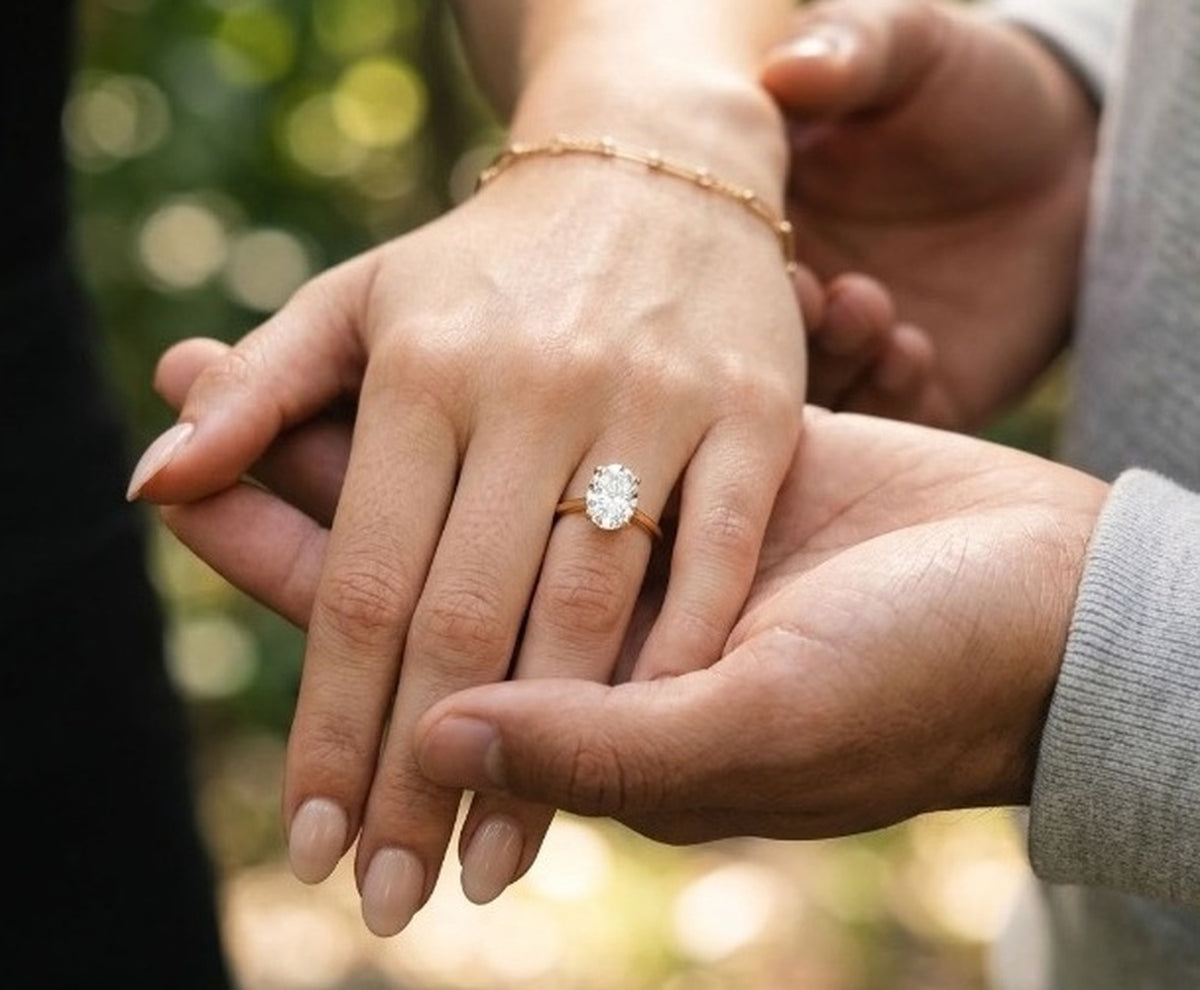
Hands holding, showing an oval diamond engagement ring

Shape is the outline. Cut is how it is faceted.

People often use the two words as if they mean the same thing. They do not. Shape is the outline of the stone. Cut style is the arrangement of its facets, which decides how the stone handles light.

There are two main cut styles. Brilliant cuts use many small facets to return light with sparkle and fire. Step cuts use long, parallel facets for a calmer, mirror-like gleam. Round, oval, pear, marquise, princess, heart, cushion and radiant are brilliant cuts. Emerald and Asscher are step cuts.

The ten shapes

Each shape links to the engagement rings we have in it. Photos show Aurika rings in the shape.

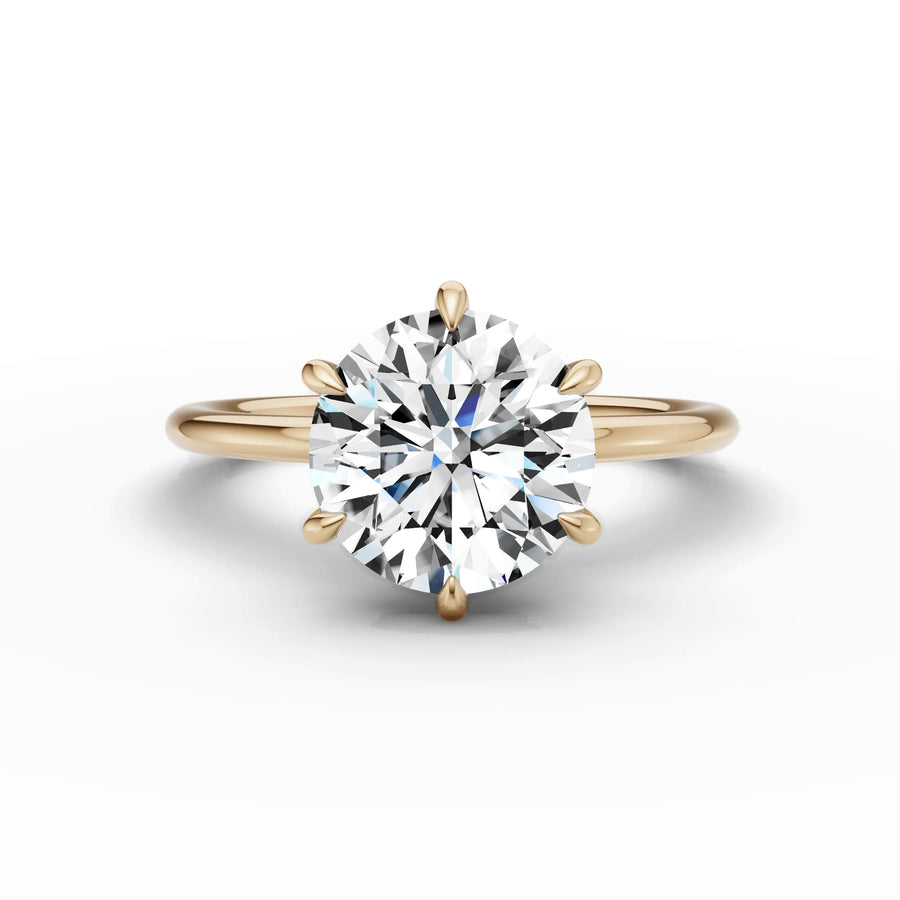
Round lab-grown diamond solitaire ring
01

Round

The classic round brilliant, with a symmetrical outline and a 57 or 58 facet arrangement.

Best for
A timeless solitaire that suits almost any setting
Good to know
It is the only shape that receives an official GIA cut grade, so cut quality is easy to compare.
Shop round engagement rings
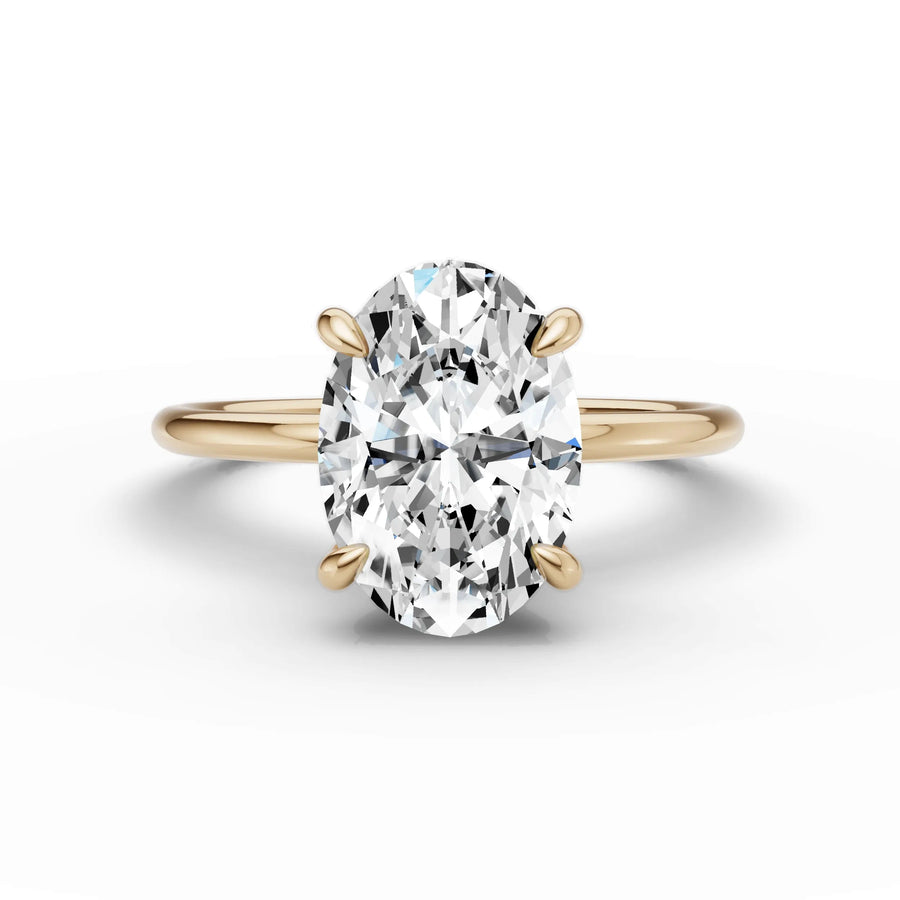
Oval lab-grown diamond solitaire ring
02

Oval

An elongated brilliant with a soft outline and no corners.

Best for
A modern take on the classic, worn east to west or north to south
Good to know
Many ovals show a darker bow-tie across the centre. A slight one is normal, so look at the stone itself.
Shop oval engagement rings
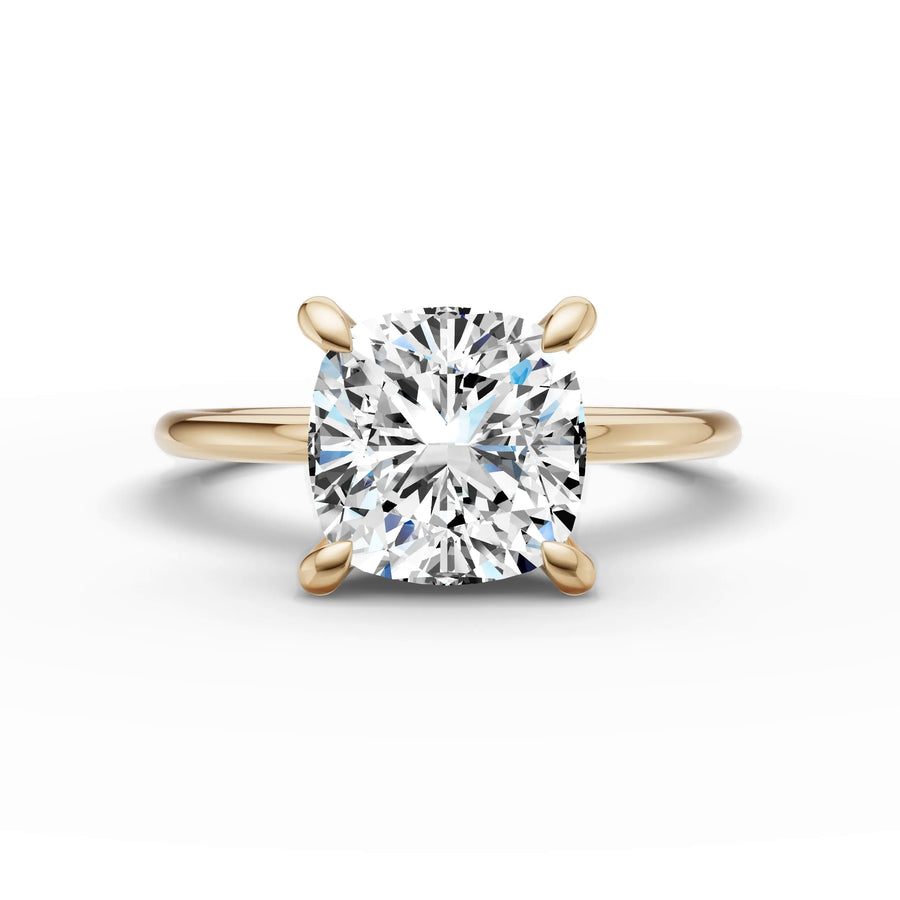
Cushion cut lab-grown diamond solitaire ring
03

Cushion

A square or slightly rectangular outline with softly rounded corners.

Best for
Vintage-leaning designs, halos and soft, romantic looks
Good to know
Cushion cuts come with different facet arrangements, so two stones can look quite different. Compare them in person or on video.
Shop cushion engagement rings
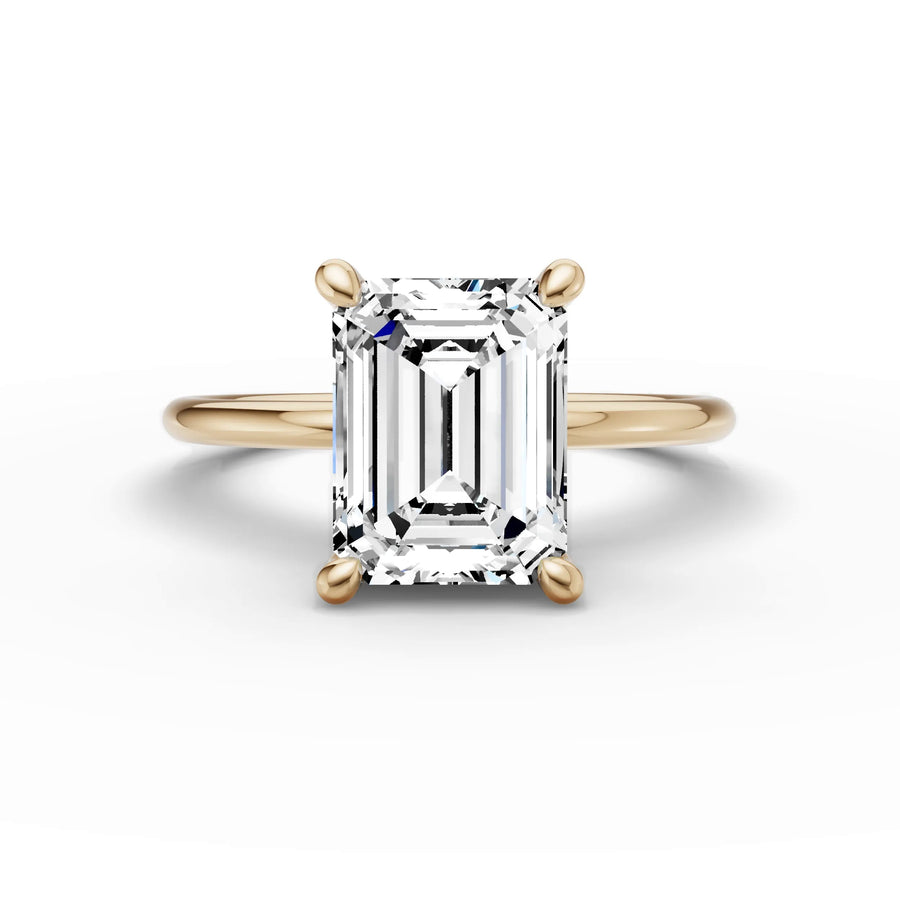
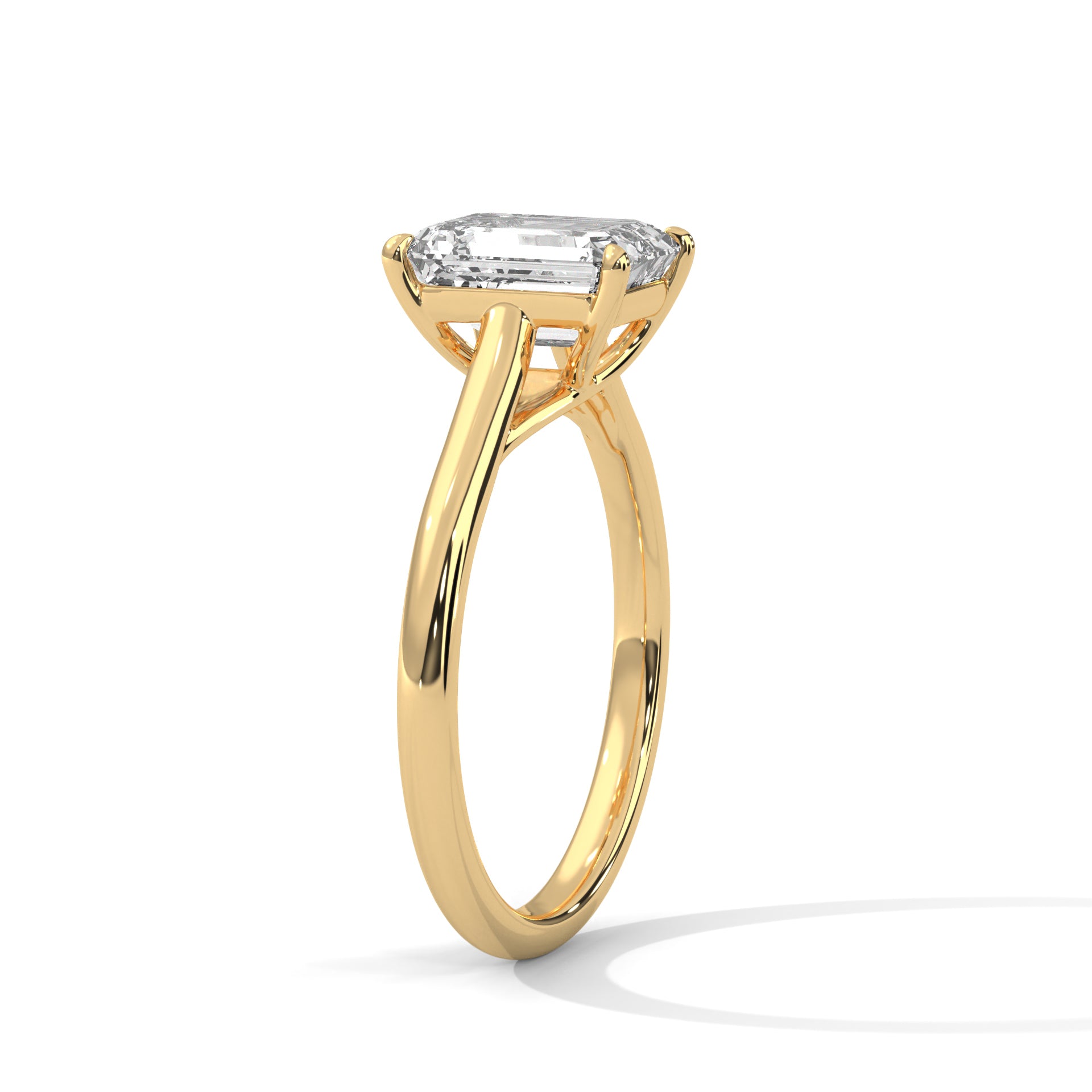
Emerald cut lab-grown diamond solitaire ring
04

Emerald

A rectangular step cut with long, open facets and cropped corners.

Best for
Clean lines and an architectural, understated look
Good to know
Large open facets show colour and clarity more readily than a brilliant cut, so the grade of the stone matters more here.
Shop emerald engagement rings
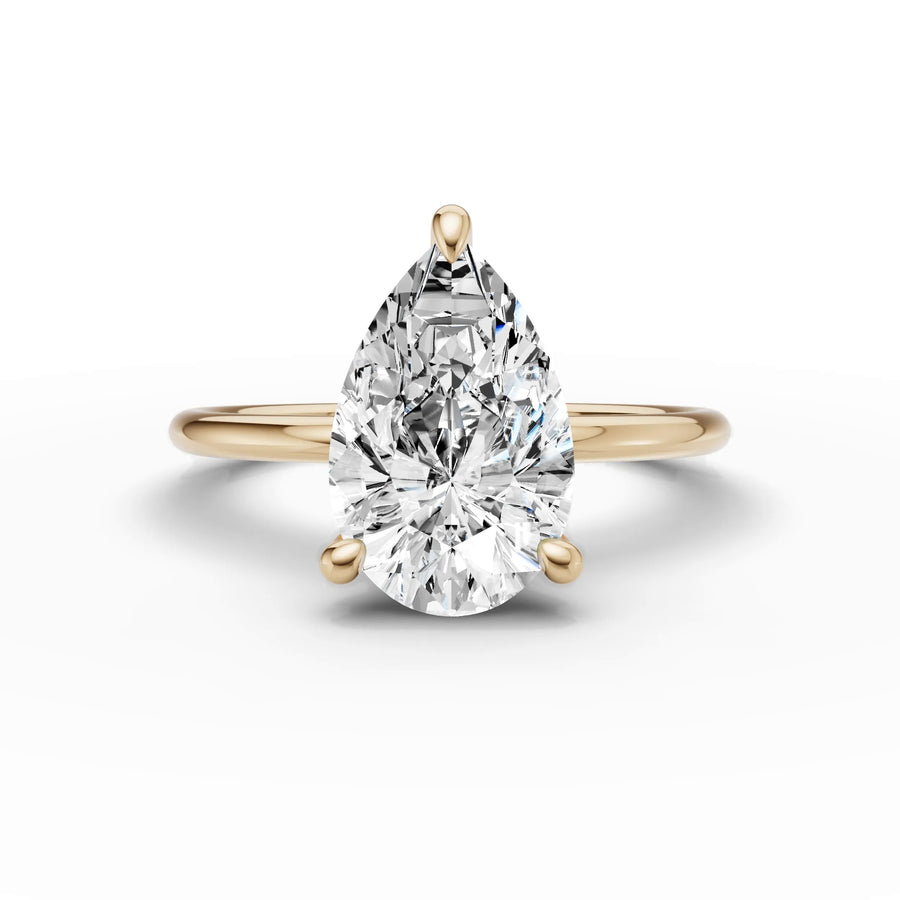
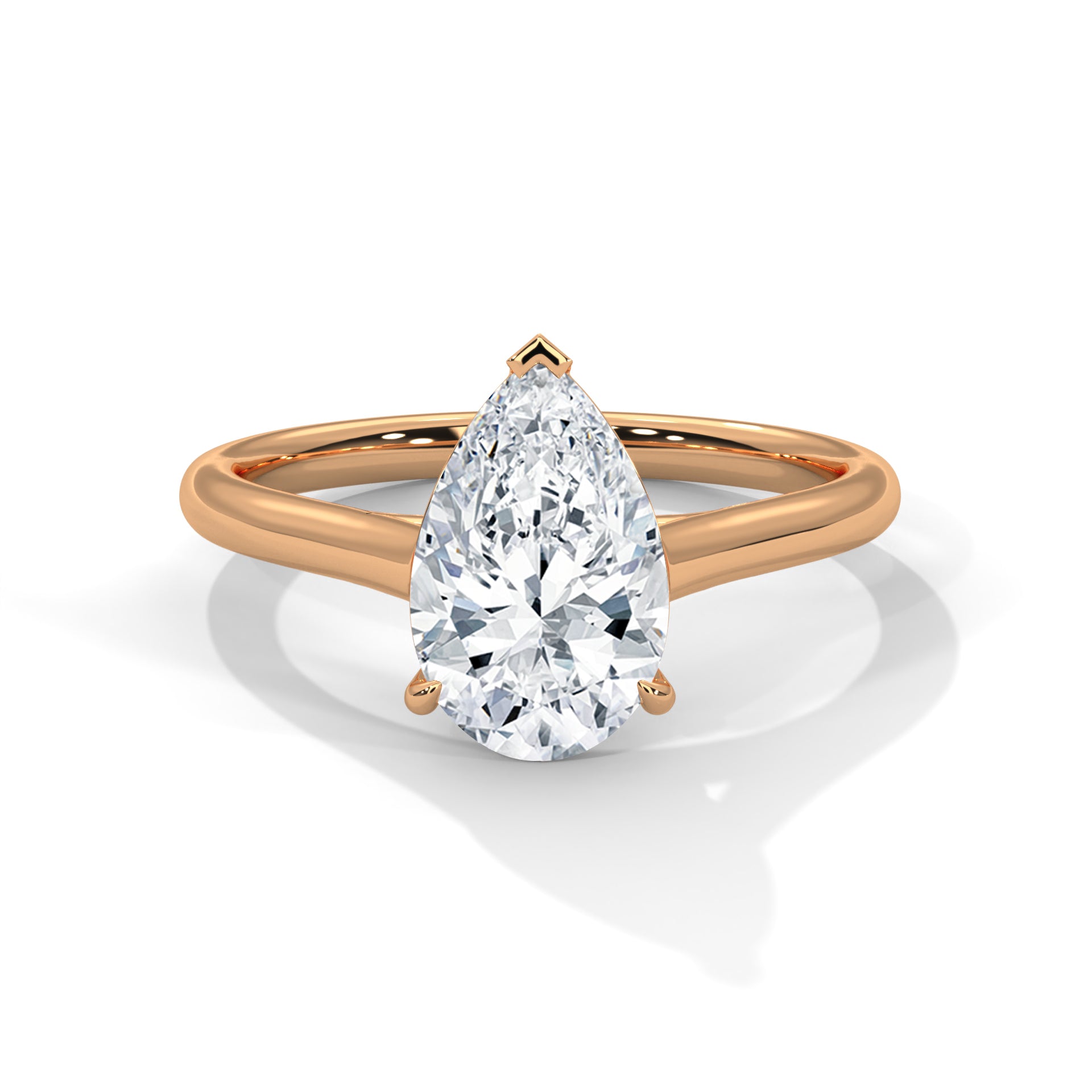
Pear shaped lab-grown diamond solitaire ring
05

Pear

A teardrop that is rounded at one end and pointed at the other.

Best for
A distinctive solitaire, or a halo that follows the outline
Good to know
The point is the most exposed part of the stone, so it should be held by a protective prong. A bow-tie can show.
Shop pear engagement rings
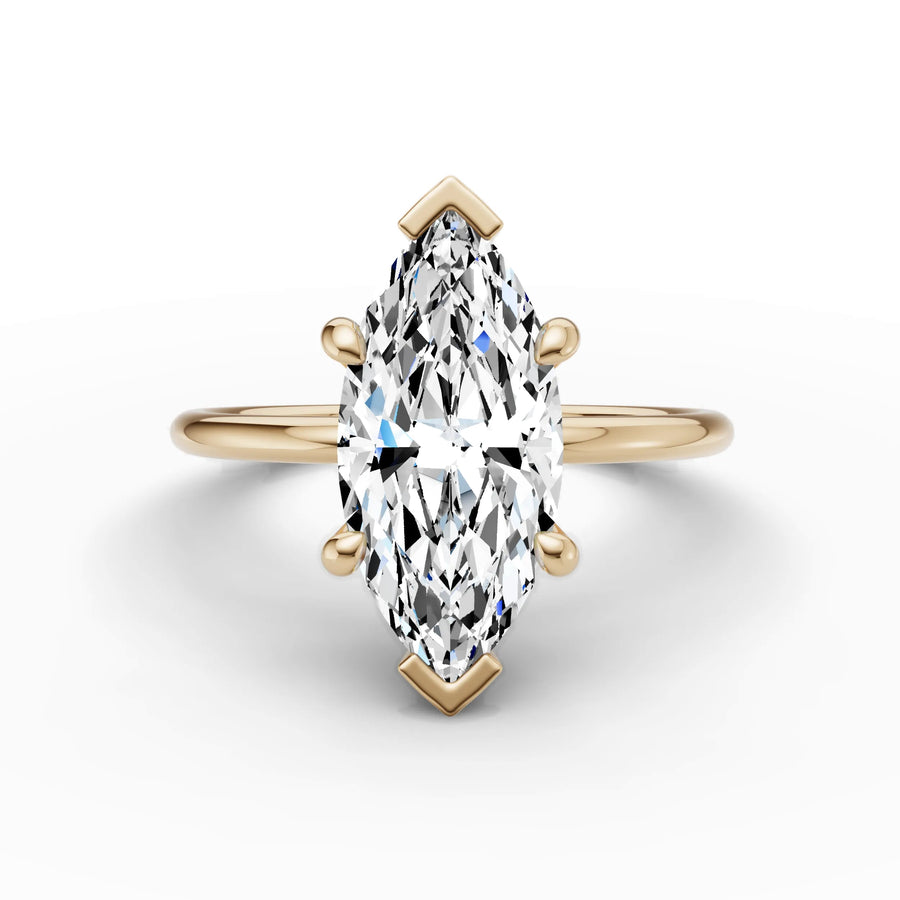
Marquise cut lab-grown diamond solitaire ring
06

Marquise

A long, boat-shaped outline with a point at each end.

Best for
A bold, elongated look with vintage character
Good to know
Both points need protective prongs. Most marquise diamonds show a bow-tie, and a slight one is normal.
Shop marquise engagement rings
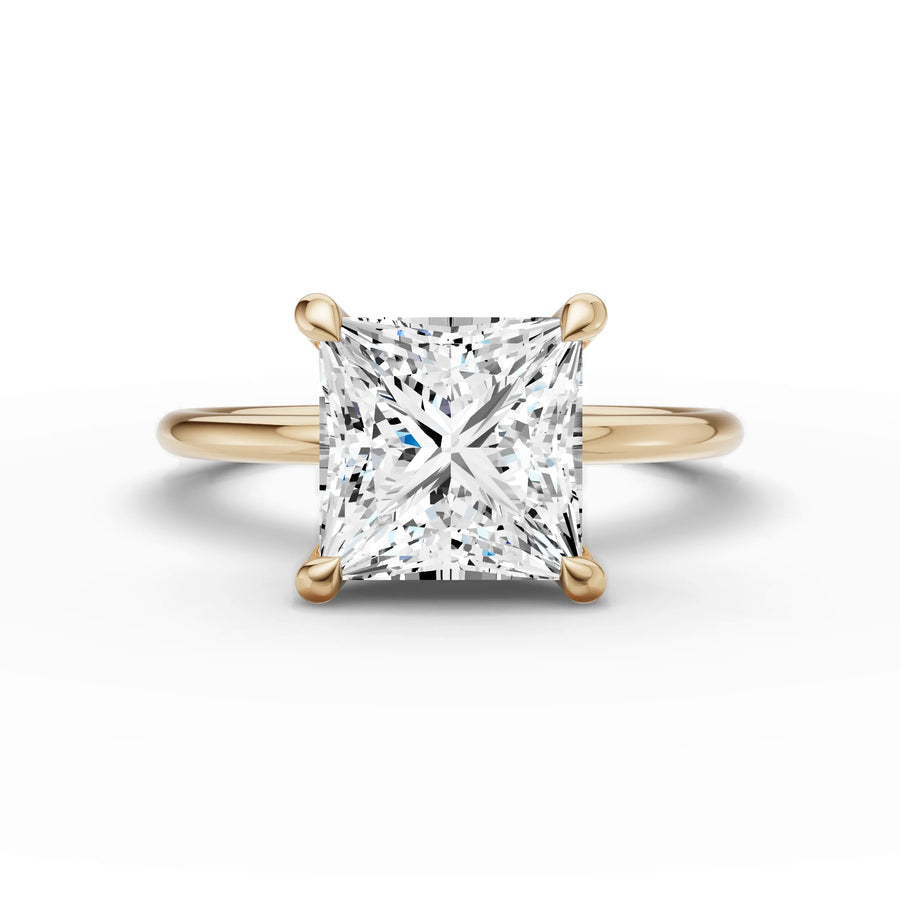
Princess cut lab-grown diamond solitaire ring
07

Princess

A square brilliant with four sharp corners.

Best for
Crisp, geometric, contemporary designs
Good to know
The corners are the most exposed part of the stone, so corner prongs or a bezel are worth considering.
Shop princess engagement rings
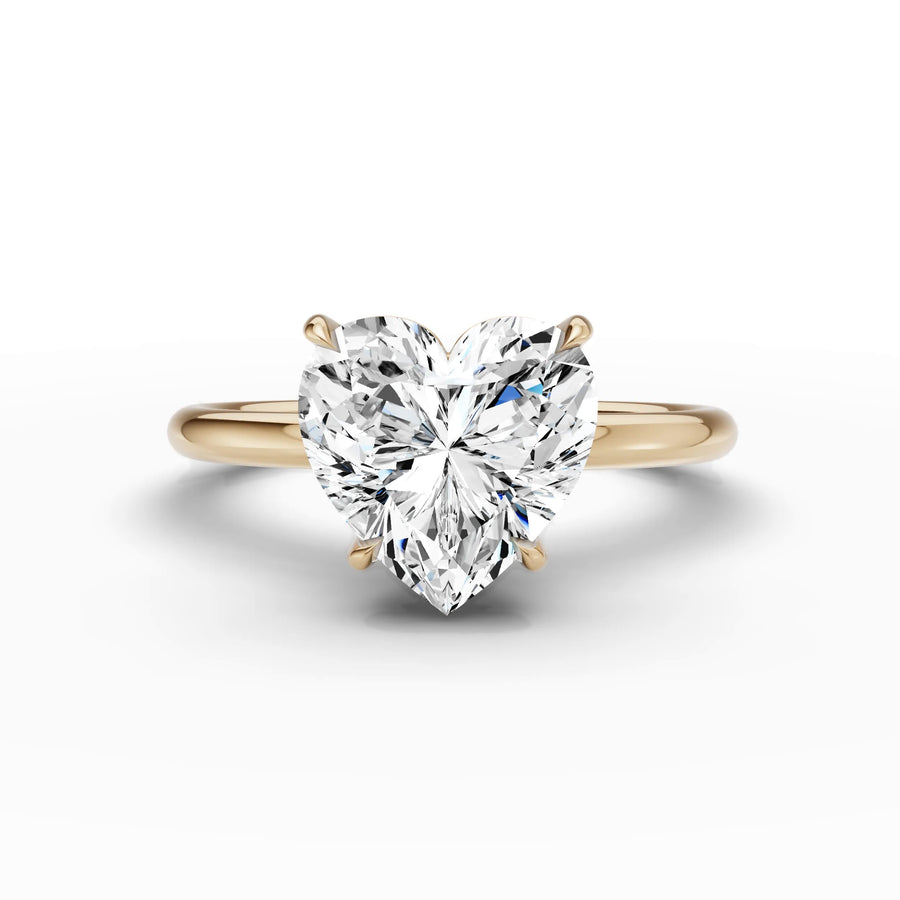
Heart shaped lab-grown diamond solitaire ring
08

Heart

A brilliant-cut heart with a cleft at the top and a point at the bottom.

Best for
A personal, sentimental statement
Good to know
The two halves should look balanced, and the point needs a protective prong. Check the symmetry of the outline.
Shop heart engagement rings
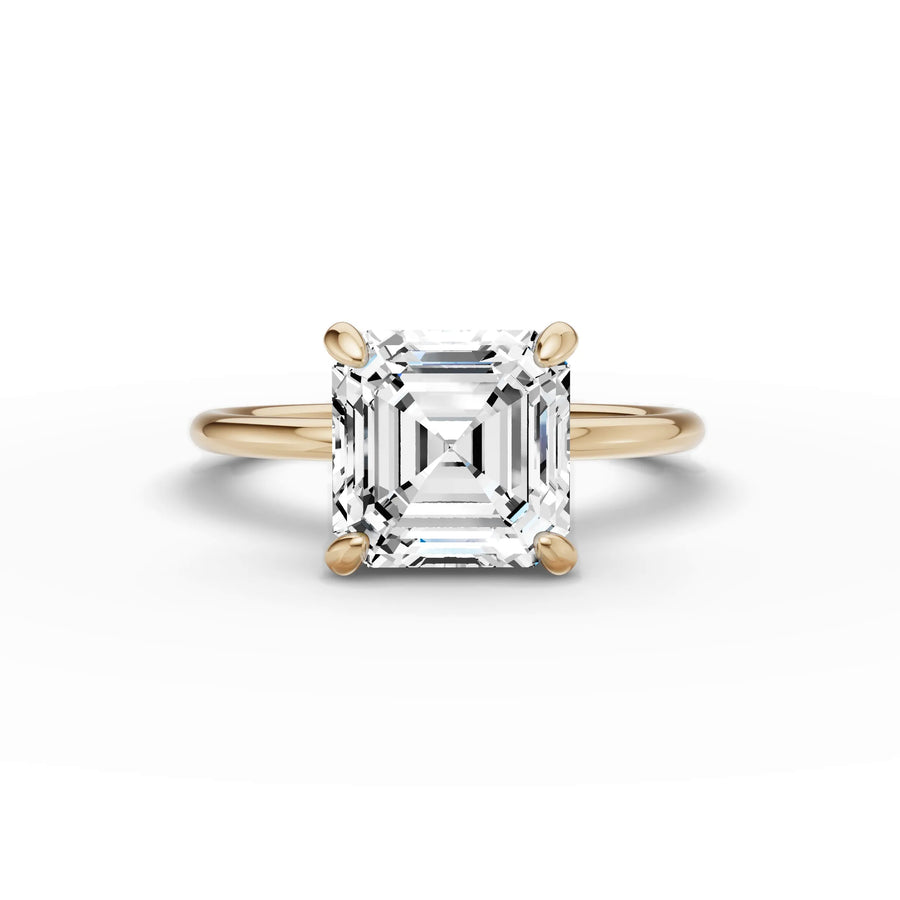
Asscher cut lab-grown diamond solitaire ring
09

Asscher

A square step cut with cropped corners and a high crown.

Best for
Art Deco and vintage-inspired designs
Good to know
Like the emerald cut, it has large open step facets that show clarity and colour more readily.
Shop asscher engagement rings
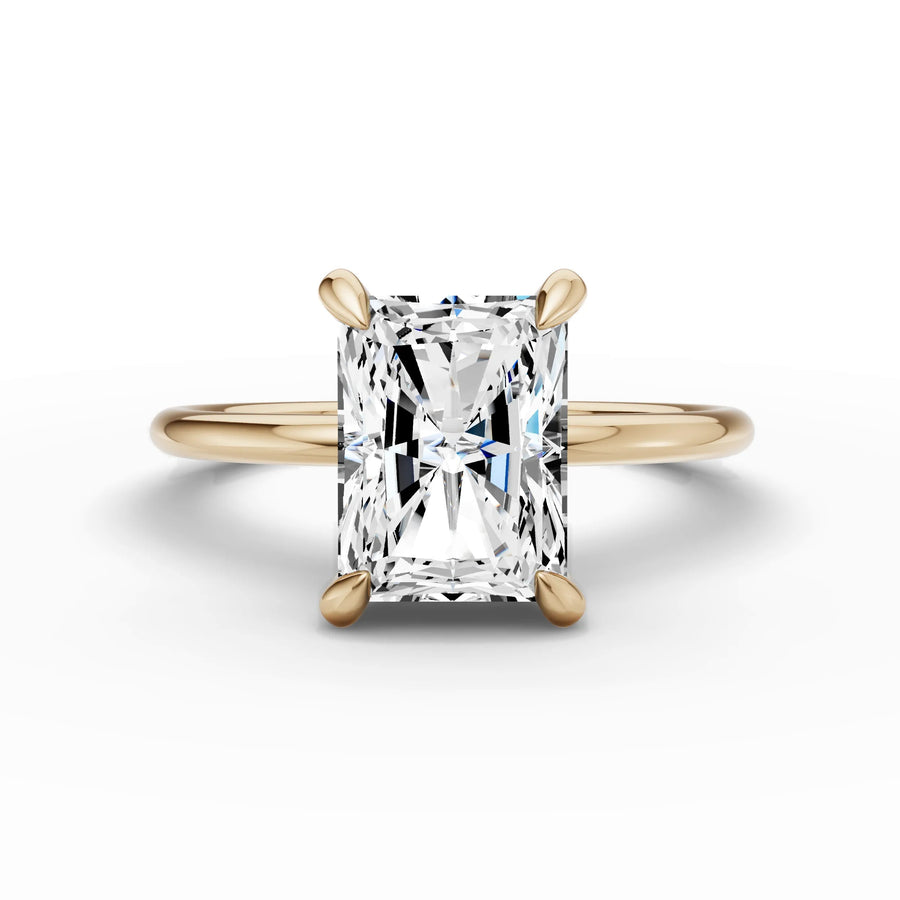
Radiant cut lab-grown diamond solitaire ring
10

Radiant

A square or rectangular outline with trimmed corners and brilliant-style facets.

Best for
A rectangular outline with a lively, faceted sparkle
Good to know
It pairs the outline of an emerald cut with brilliant faceting. The trimmed corners are less exposed than a sharp corner.
Shop radiant engagement rings

How the shapes compare

Shape Cut style Points or corners Bow-tie (GIA)
Round Brilliant None Not stated
Oval Brilliant None Often seen
Cushion Brilliant (modified) Rounded corners Not stated
Emerald Step Cropped corners Not stated
Pear Brilliant One point Often seen
Marquise Brilliant Two points Often seen
Princess Brilliant Four corners Not stated
Heart Brilliant One point Not stated
Asscher Step Cropped corners Not stated
Radiant Brilliant Trimmed corners Not stated

Cut styles follow the GIA's descriptions. "Often seen" marks the elongated brilliant shapes where the GIA pages listed below describe a bow-tie. "Not stated" means those pages do not say, not that it never happens. Any bow-tie depends on the individual stone and its proportions.

Choosing a shape for your style

  • Elongated shapes (oval, pear, marquise, emerald) follow the line of the finger.
  • Round and cushion shapes have soft, classic outlines.
  • Square shapes (princess, Asscher) are crisp and geometric.
  • Wearing the ring every day? Shapes with rounded or trimmed corners and no points (round, oval, cushion, radiant) leave less exposed.
  • Pointed shapes (pear, marquise, heart) and sharp corners (princess) are best set with protective prongs.

The best test is to try a few. Shapes that look alike on a screen can feel quite different on the hand. Walk-ins are welcome at our Hatton Garden studio.

Shapes and the settings to look at

Most settings can be made around any shape, but some pairings are worth a look first. These are settings we currently show in each shape. Open a shape's collection to see them all.

Prefer to begin with the setting? Browse by solitaire, halo, three stone or hidden halo.

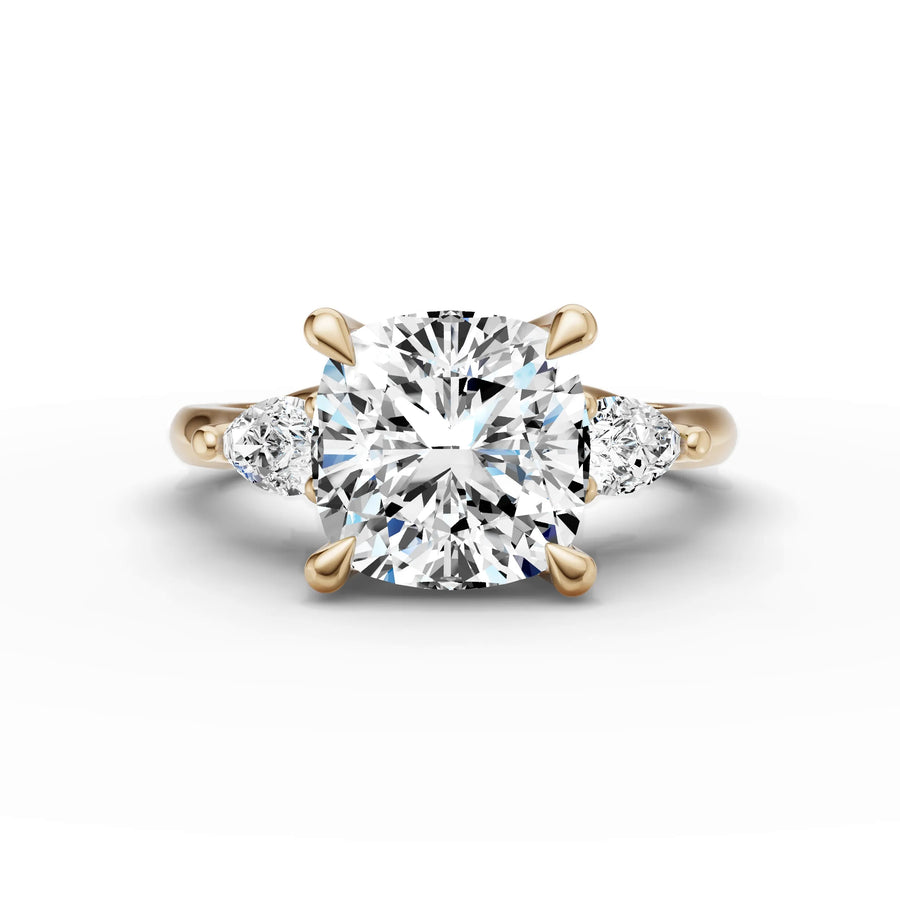
Cushion cut three stone engagement ring with pear side stones
Shape Settings we show in it
Round Solitaire, split shank, dainty pavé, twisted shank, nature inspired
Oval Solitaire, shoulder set, dainty pavé, halo pavé
Cushion Shoulder set, halo, three stone, hidden halo, nature inspired
Emerald Solitaire, shoulder set, halo, hidden halo, dainty pavé
Pear Solitaire, shoulder set, halo and pavé, bezel, nature inspired
Marquise Solitaire, shoulder set, three stone, vintage pavé
Princess Solitaire, split shank, half bezel, dainty pavé, vintage pavé
Heart Solitaire, halo, halo and pavé, three stone, bezel
Asscher Solitaire, cathedral solitaire, bezel, halo
Radiant Solitaire, cathedral solitaire, east-west, bezel, halo, hidden halo, three stone

Frequently asked questions

What is the difference between shape and cut?

Shape is the outline of the diamond seen from above. Cut style describes how its facets are arranged. Two stones with the same shape can be cut in different styles, and the quality of the cut changes how the stone handles light.

Which shape is the most popular?

The GIA describes the round brilliant as the most popular diamond shape. Every shape in this guide is a matter of taste, so the right one is the one you keep coming back to.

What is a bow-tie?

A darker area across the middle of some elongated stones, such as oval, pear and marquise. It comes from the way light moves through the stone. A slight bow-tie is normal. A broad, dark one can be distracting, so look at the actual diamond in person or on video.

Does Aurika offer all ten shapes?

Yes. Round, oval, cushion, emerald, pear, marquise, princess, heart, Asscher and radiant are all available as lab-grown diamonds in the ring builder.

Are the diamonds certified?

Your chosen centre diamond comes with GIA or IGI certification. The certification covers the centre diamond only.

Can I see the shapes in person?

Yes. Walk-ins are welcome at our Hatton Garden studio, and you can also book an appointment.

Found a shape you love?

Start with the diamond in our ring builder, or come and see the shapes in person at our Hatton Garden studio.