






Diamond education

The 4Cs explained
Every diamond is described by four qualities: cut, colour, clarity and carat weight. This page explains each one in the terms gemmological laboratories use, and how they apply to lab-grown diamonds.
Cut
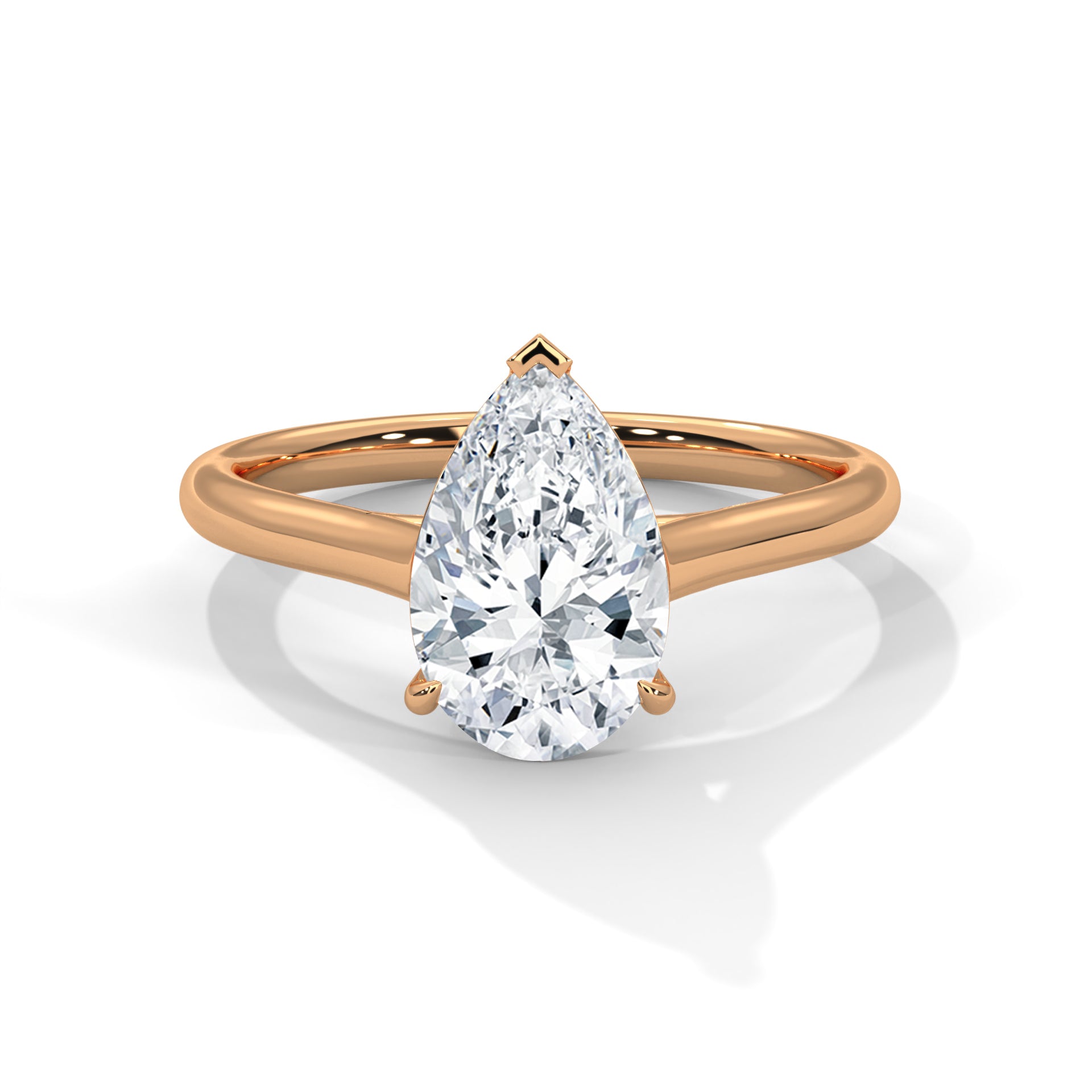
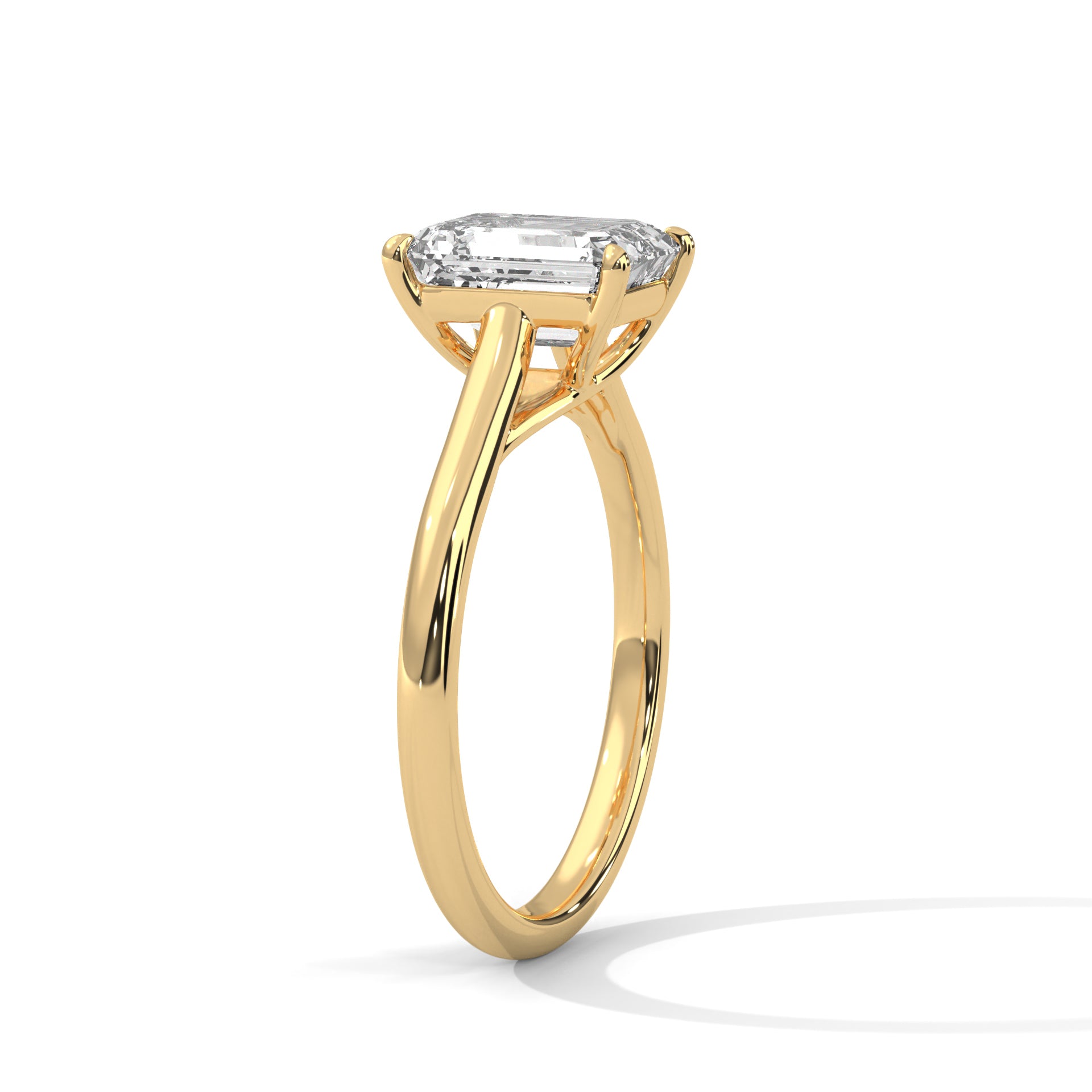
Cut describes how a diamond interacts with light. It covers the arrangement and proportions of the facets, and it is not the same as shape, which is the outline, such as oval or pear.
Three effects are judged: brightness, the white light reflected from inside and outside the stone; fire, the dispersion of light into the colours of the spectrum; and scintillation, the pattern of light and dark areas and the sparkle when the diamond moves.
Colour
Diamond colour is mostly the absence of colour. Laboratories grade it on the D-to-Z scale, from D for colourless to Z for light yellow, light brown or light gray.
Colour is graded under controlled lighting, by comparing the stone with master stones of known grades. Diamonds with more colour than Z, or with a colour outside the yellow, brown and gray range, are called fancy colour diamonds.
Clarity
Clarity describes the inclusions, which are internal or surface-reaching characteristics, and blemishes, which are external features. The grade reflects their size, location, visibility and number.
The GIA scale has 11 grades, assigned under 10x magnification. Many inclusions and blemishes cannot be seen with the naked eye.
| Grade | What it means |
|---|---|
| Flawless (FL) | No inclusions and no blemishes visible under 10x magnification. |
| Internally Flawless (IF) | No inclusions visible, but there are blemishes. |
| Very, Very Slightly Included (VVS1, VVS2) | Inclusions so slight they are difficult for a skilled grader to see. |
| Very Slightly Included (VS1, VS2) | Inclusions can be seen with effort and are minor. |
| Slightly Included (SI1, SI2) | Inclusions are noticeable. |
| Included (I1, I2, I3) | Inclusions are obvious and may affect transparency, brilliance and durability. |
Carat weight
Carat measures weight, not size. One metric carat is 200 milligrams, divided into 100 points, so a diamond of 0.25 carat is a "twenty-five pointer".
Two diamonds of the same carat weight are not necessarily equal. Cut, colour and clarity are assessed as well.
Lab-grown diamonds
Lab-grown diamonds have the same crystal structure as natural diamonds, tightly bonded carbon atoms, and nearly the same chemical, optical and physical properties. They differ in how they grow. A lab-grown diamond is made in a laboratory, rather than formed in the earth over millions to billions of years.
Two main methods are used. High-pressure, high-temperature (HPHT) growth recreates some of the conditions of natural formation. Chemical vapour deposition (CVD) grows the diamond layer by layer on a diamond seed. Gemmological laboratories such as GIA can tell lab-grown and natural diamonds apart with specialised instruments.
Aurika offers lab-grown diamonds. GIA or IGI certification is available for your chosen centre diamond. Centre diamonds only.
Read more
- Decoding Diamond Purity: a guide to clarity and quality
- How to Choose the Perfect Diamond Engagement Ring
- Engagement Ring Styles and Settings: How to Choose
- The Complete Guide to Buying an Engagement Ring in London
Grading terms and scales are from GIA: cut, colour, clarity, carat weight, and lab-grown diamonds.